




How to Choose the Perfect Spectacle Frames
A Complete Guide
Choosing the right glasses frames isn’t just about style – it directly affects your vision, comfort, and how well your lenses perform. Whether you’re buying prescription glasses, updating your look, or needing specialised lenses, the right frame makes all the difference.
In this guide, we answer common questions patients ask and share expert tips to help you find the perfect pair.
When selecting spectacle frames, there are four key factors to consider:
Fit and size
Frame shape
Colour
Material
A well-chosen frame improves not only how your glasses look, but also how clearly you see and how comfortable they feel throughout the day.
Fit & Size
A proper fit is essential for clear vision and all-day comfort – especially for high-prescription glasses.
Your glasses should:
Sit comfortably on your nose without slipping
Keep your eyes centred in each lens
Rest lightly on your ears without pressure
Key frame measurements include:
Lens width (eye size)
Bridge width
Temple (arm) length
Poorly fitting glasses can lead to blurred vision, eye strain, and headaches.
Frame Shape
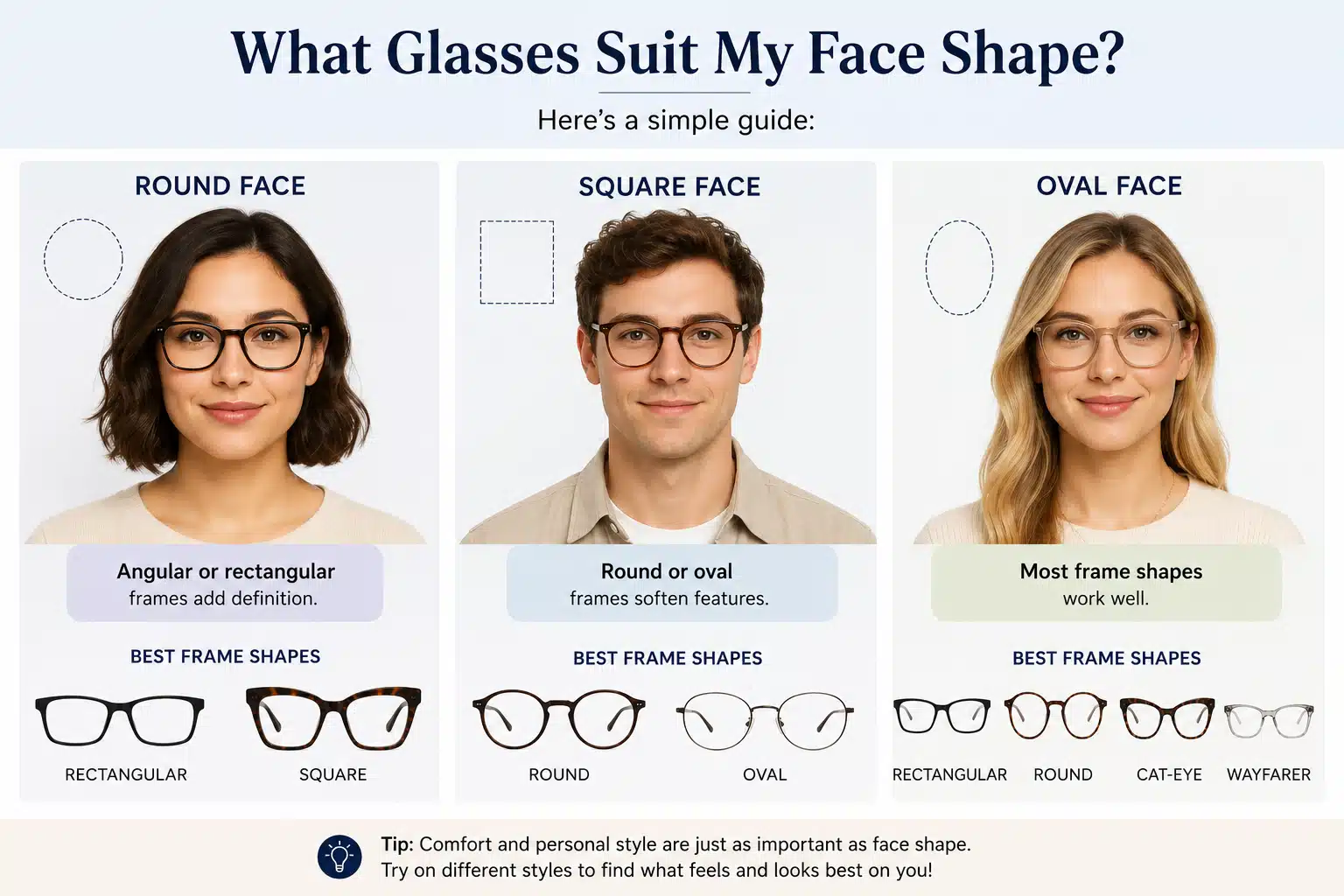
One of the most common questions is: “What glasses suit my face shape?”
Here’s a simple guide:
Round face
Angular or rectangular frames add definition
Square face
Round or oval frames soften features
Oval face
Most frame shapes work well
Optometrist tip:
For stronger prescriptions, smaller and more rounded frames often provide better visual clarity and thinner lenses.
Frame Colour
The best frame colour depends on your personal style and features.
Consider:
Skin tone (warm vs cool)
Hair and eye colour
Lifestyle (professional vs bold look)
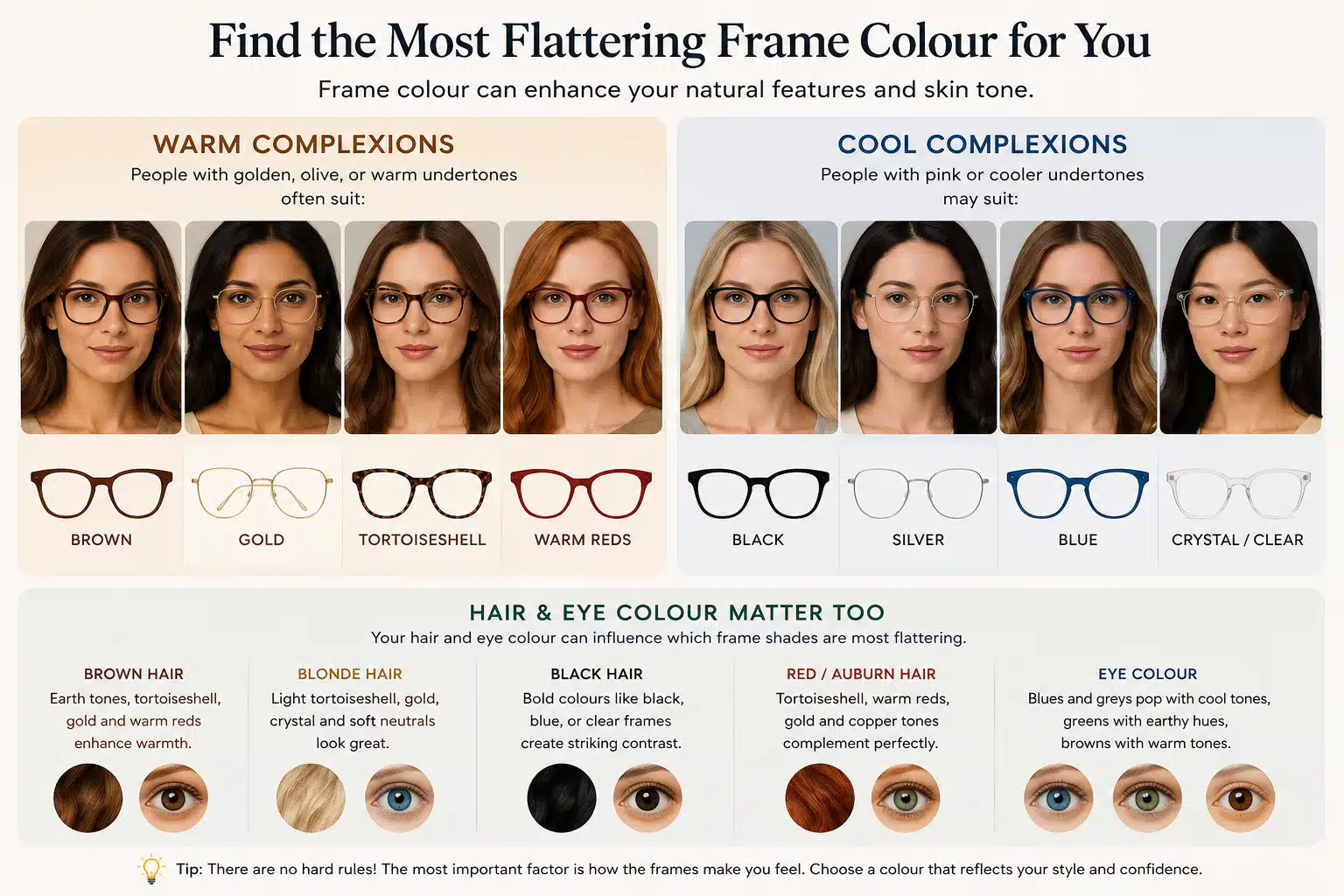
Frame colour can enhance your natural features and skin tone.
Warm Complexions
People with golden, olive, or warm undertones often suit:
Brown
Gold
Tortoiseshell
Warm reds
Cool Complexions
People with pink or cooler undertones may suit:
Black
Silver
Blue
Grey
Crystal or clear frames
Hair and eye colour can also influence which shades are most flattering.
Practical advice:
Dark frames can make thick lenses less noticeable
Light or transparent frames may highlight lens thickness
Frame Material
Different glasses frame materials offer unique benefits:
Acetate frames: Lightweight, stylish, and great for thicker lenses
Metal frames: Sleek, adjustable, and minimal
Titanium frames: Lightweight, durable, and hypoallergenic
Flexible frames (TR90): Ideal for kids and active lifestyles
Choosing the right material can improve comfort, durability, and long-term wear.
Frequently Asked Questions.
Why Is Nose Bridge Fit So Important?
A poorly fitting bridge is one of the main reasons glasses slip or feel uncomfortable.
Low nose bridge: Choose frames with adjustable nose pads or “low bridge fit” designs
High nose bridge: Standard frames usually fit well
Proper bridge fit ensures your lenses stay correctly aligned for optimal vision.
What Glasses Frames Are Best for Strong Prescriptions?
If you have a high prescription, frame choice becomes even more important.
For high minus prescriptions (-5.00D and above):
Smaller frames
Round or oval shapes
Thicker acetate frames
Benefits:
Thinner lens edges
Reduced distortion
For high plus prescriptions (+4.00D and above):
Smaller frames
Well-centred lenses
Benefits:
Reduced magnification
Better cosmetic appearance
Which Frames Work Best for Progressive Lenses?
If you wear multifocal or progressive lenses, not all frames will work well.
Look for:
Deeper frames (at least 18–20mm height)
A stable, well-fitted design
Avoid:
Very small or shallow fashion frames
For office lenses or computer glasses, larger frames provide a wider viewing area.
What About Glasses for Kids or Myopia Control?
Children’s glasses need extra consideration, especially for myopia (short-sightedness) control.
Frames should:
Fit securely and comfortably
Keep lenses properly centred
Be durable and flexible
This is particularly important for advanced lens designs used in myopia management.
How Do I Choose Glasses for My Lifestyle?
Your daily routine should influence your frame choice.
Active lifestyle: Lightweight, secure-fitting frames
Office work: Comfortable frames with anti-glare lenses
Kids: Durable, flexible materials
Everyday wear: Balance of style, comfort, and function
Final Thoughts
Choosing the Best Glasses Frames
The best glasses frames are the ones that:
Fit properly and feel comfortable
Suit your prescription and lens type
Match your lifestyle and personal style
Choosing the right frames isn’t just cosmetic—it’s essential for achieving clear, comfortable vision.
Ready to See Clearly?
Reach Out Today.
We Accept All Major Health Funds