




Lens Options and Add-Ons
Understanding Options and Add-Ons for Your Glasses
Modern spectacle lenses offer much more than basic vision correction. Today’s lens technologies can improve visual comfort, reduce glare, enhance appearance, and better suit your lifestyle needs. From anti-reflective coatings to photochromic and polarised lenses, choosing the right lens options can make a significant difference to your everyday vision.
The best lens combination depends on:
- Your prescription
- Lifestyle and work environment
- Driving habits
- Screen usage
- Outdoor activities
- Cosmetic preferences
Here’s a guide to some of the most popular lens add-ons available at your optometry practice.

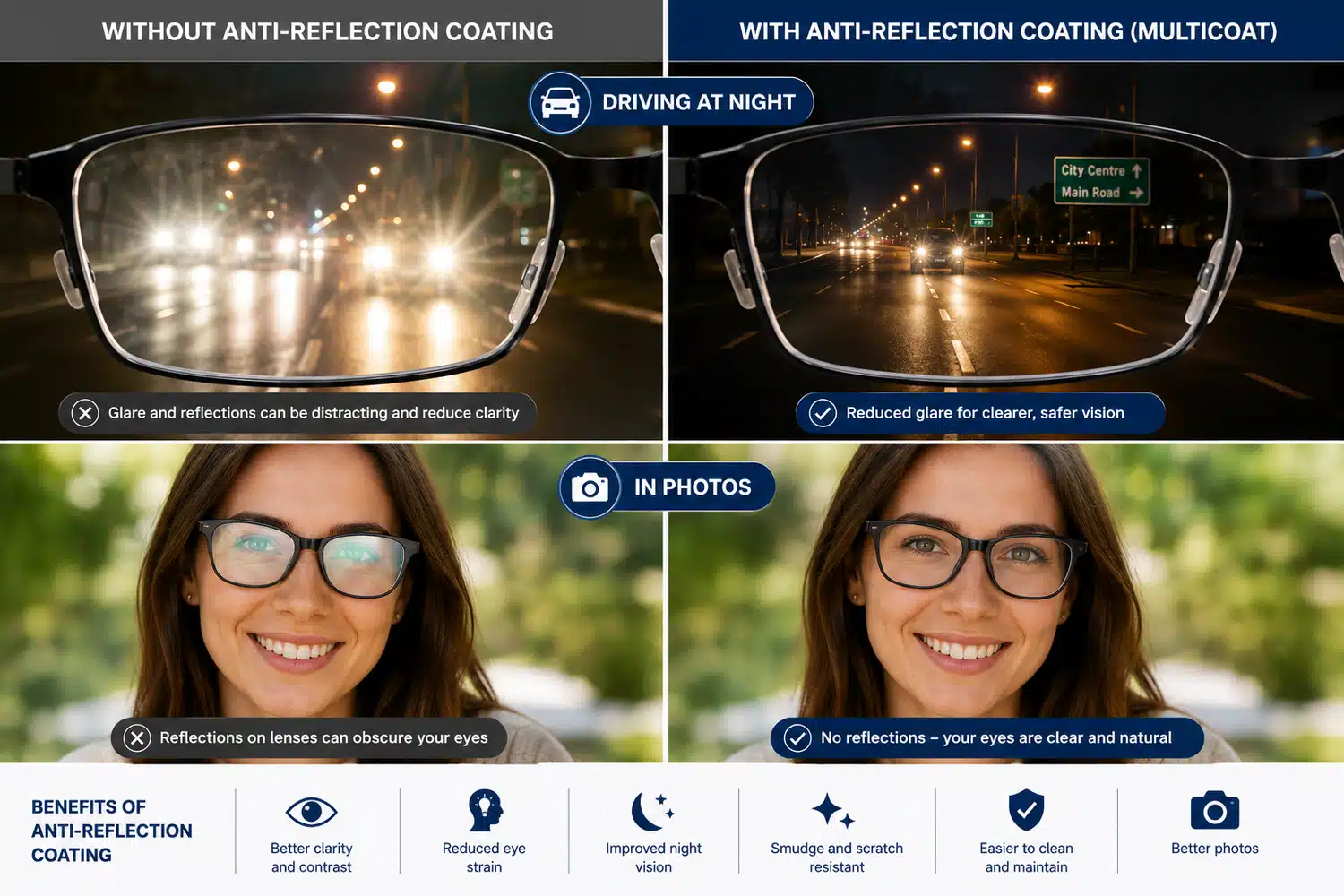
Anti-Reflective Coating (Multicoat)
Anti-reflective coating, also known as multicoat, reduces reflections on the lens surface to provide clearer and more comfortable vision.
Benefits include:
- Reduces glare from headlights and screens
- Improves night driving vision
- Makes lenses appear clearer and more transparent
- Reduces eye strain during screen use
- Enhances cosmetic appearance in photos and face-to-face conversations
Most premium anti-reflective coatings also include scratch resistance, water resistance, smudge resistance, and easier cleaning — making them especially beneficial for computer users, drivers, and multifocal lens wearers.
Photochromic Lenses (Transitions)
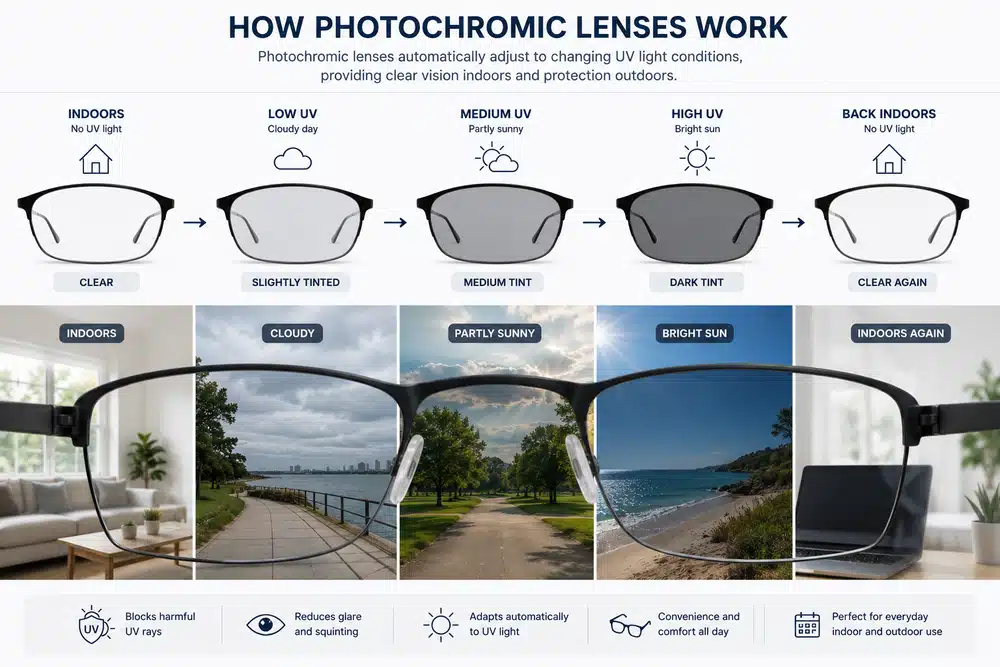
Photochromic lenses, commonly known as Transitions lenses, automatically darken in sunlight and return to clear indoors.
Benefits include:
- The convenience of glasses and sunglasses in one
- UV protection for eye health
- Reduced brightness outdoors
- Comfortable vision in changing light conditions
These lenses are ideal for people frequently moving between indoor and outdoor environments. It’s worth noting that photochromic lenses may not darken fully inside vehicles, as many car windscreens filter UV light.
Polarised Lenses Vs. Lens Tinting
Although both tinted and polarised lenses reduce brightness, they function differently.
Tinted Lenses Simply darken the lens to reduce overall light intensity, available in different colours and darkness levels for comfort and cosmetic preference.
Polarised Lenses Contain a special filter that reduces reflected glare from surfaces such as roads, water, snow, and car bonnets.
Benefits of polarised lenses include:
- Sharper and more comfortable vision outdoors
- Reduced glare while driving
- Improved visibility for fishing, boating, and outdoor activities
- Less eye fatigue in bright conditions
Polarised sunglasses are particularly popular for driving and recreational outdoor use.

Blue Light Filter Lenses
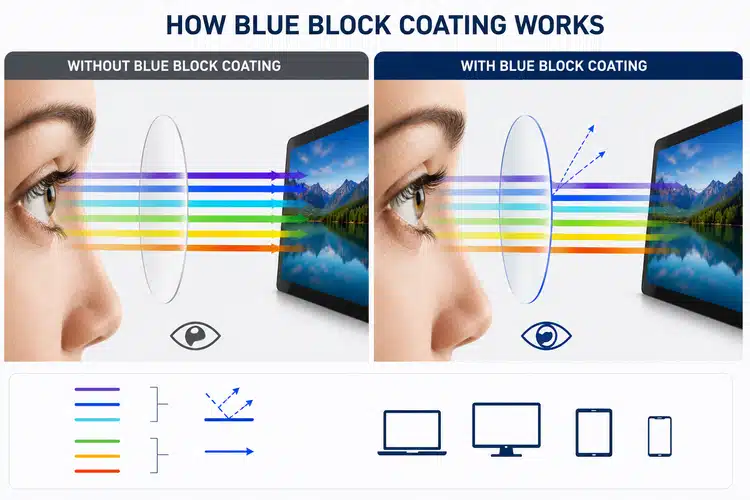
Blue light filter lenses are designed to reduce exposure to high-energy visible (HEV) light emitted from digital screens, LED lighting, and other artificial light sources.
Benefits include:
- Reduced digital eye strain during extended screen use
- Improved visual comfort when working on computers, tablets, or phones
- May support better sleep quality by limiting blue light exposure in the evening
- A clear, non-tinted lens suitable for everyday indoor and outdoor wear
These lenses are popular among office workers, students, and anyone spending long hours on digital devices. They can be added to most prescription lenses, including single vision and multifocal designs.
Mirror Coatings
Mirror coatings add a reflective finish to sunglass lenses and are available in various colours.
Benefits include:
- Further reduces brightness and glare
- Enhances comfort in very bright environments
- Provides additional cosmetic styling
- Popular for sports and outdoor sunglasses
Mirror coatings are commonly combined with polarised lenses for outdoor use.

High-Index (Lens Thinning) Lenses
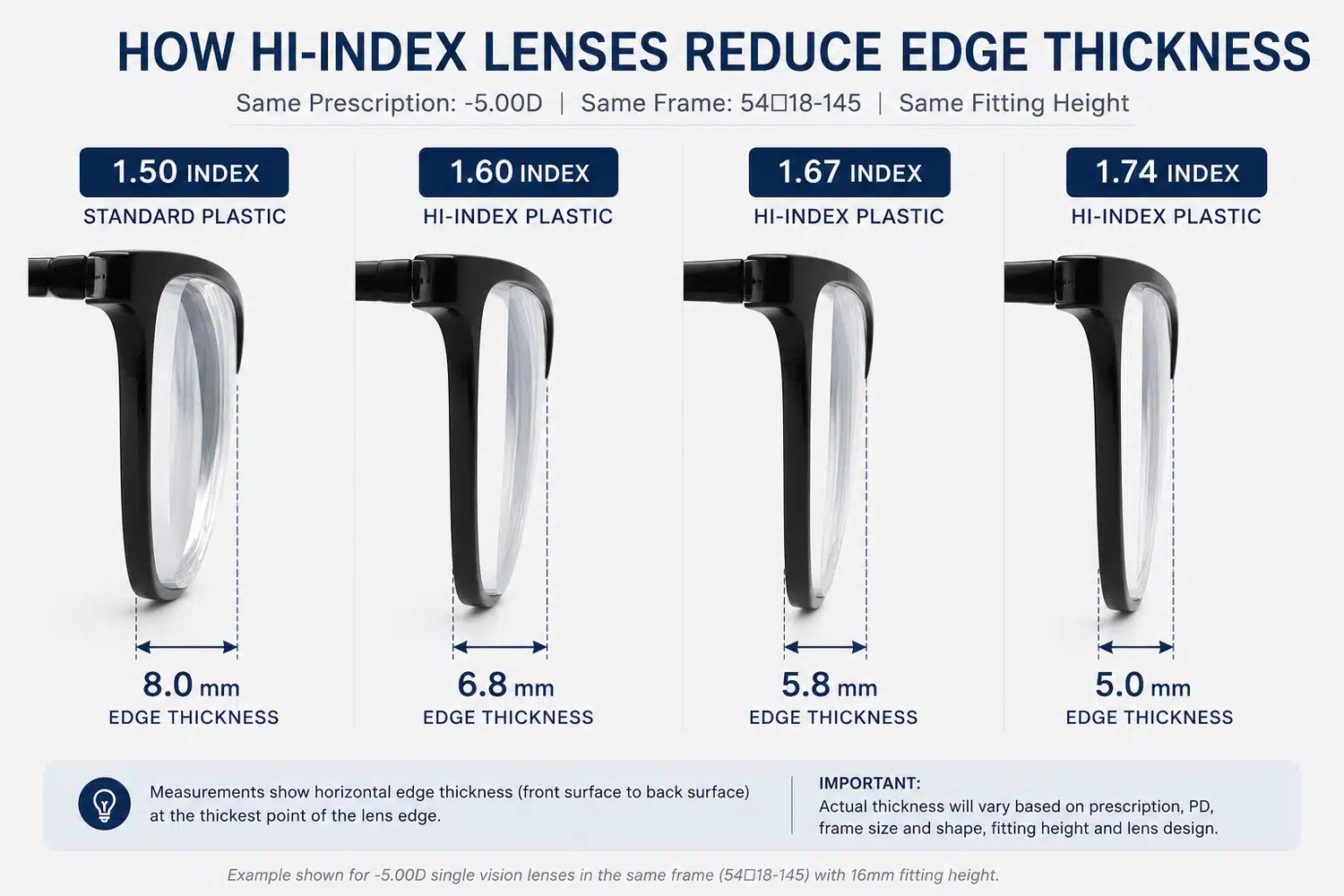
High-index lenses are designed to make lenses thinner and lighter, especially for stronger prescriptions.
Benefits include:
- Reduced lens thickness
- Lighter, more comfortable glasses
- Improved cosmetic appearance
- Better suitability for rimless or fashionable frames
High-index lenses are commonly recommended for moderate to high prescriptions, particularly for myopia and higher levels of long-sightedness.
Final Thoughts
Need Help Choosing the Right Lens Options?
Selecting the right lenses involves more than just your prescription. The ideal combination of lens materials, coatings, and add-ons depends on how you use your vision every day. Whether you’re looking for reduced glare while driving, greater comfort when using digital devices, thinner lenses for a stronger prescription, or convenient light-adaptive lenses, the right lens package can make a significant difference to your visual experience.
At Optometry Outlet, our experienced optometrists and optical dispensers will take the time to understand your lifestyle, work requirements, hobbies, and budget before recommending the most suitable lens options. We offer a comprehensive range of lens technologies from leading manufacturers, including premium anti-reflective coatings, photochromic lenses, polarised sunglasses, blue light filtering lenses, and high-index lens designs.
Visit Optometry Outlet for personalised advice and discover how modern lens technology can help you achieve clearer, more comfortable vision every day.
Ready to See Clearly?
Reach Out Today.
We Accept All Major Health Funds