




Dry Eye Assessment & Treatment.
What Is Dry Eye?
If you experience burning, irritation, redness, watery eyes, or fluctuating vision, our dry eye assessments can identify the underlying cause and help develop an effective treatment plan.
Dry eye occurs when your eyes don’t produce enough tears, or when your tears evaporate too quickly. A healthy tear film has three layers — oil, water, and mucus — that work together to keep your eyes comfortable and your vision clear. When this balance is disrupted, the eyes can become irritated, inflamed, and prone to dryness.
Dry eye is a common but manageable condition. With the right diagnosis and treatment plan, most patients experience significant relief and improved comfort.
If you’re experiencing ongoing dryness, irritation, or fluctuating vision, don’t wait for symptoms to worsen. Early treatment can significantly improve symptoms and prevent complications.
Our optometrists assess dry eye using a combination of:
- Tear film evaluation
- Meibomian gland assessment (oily layer of tears)
- Eye surface staining tests
- Tear breakup time measurement
- Symptom questionnaires
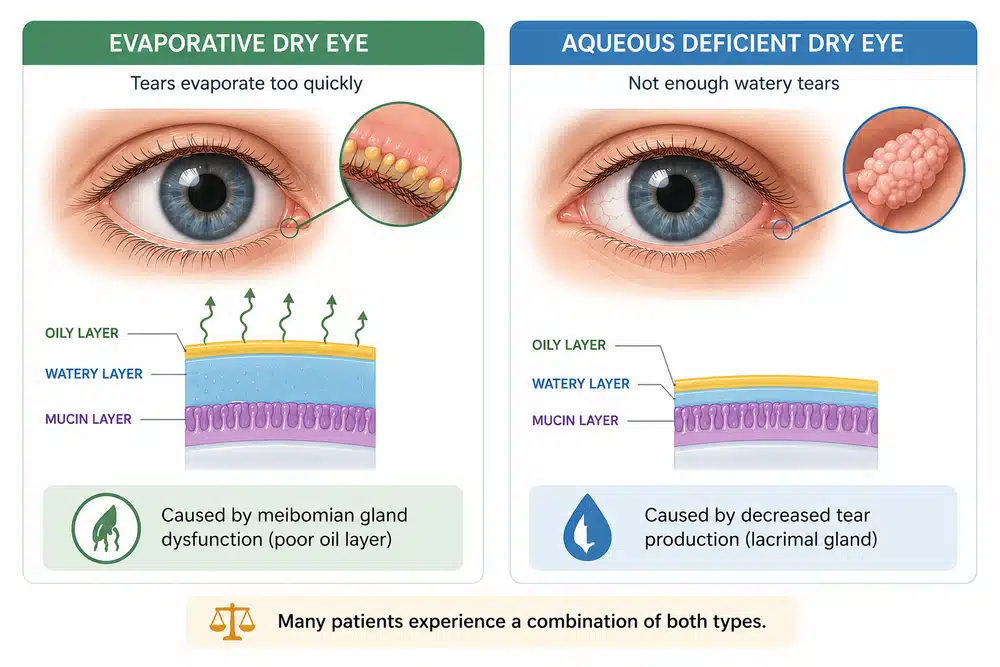
Understanding the Types of Dry Eye
Most cases of dry eye fall into one of two categories — and many patients experience a combination of both.
Aqueous Deficient Dry Eye
This occurs when the eyes don't produce enough of the watery component of tears, often linked to ageing, autoimmune conditions, or certain medications.
Evaporative Dry Eye
The most common form, caused by tears evaporating too quickly due to dysfunction of the oil-producing glands in the eyelids.
Risk Factors & Symptoms
Dry eye can affect anyone, but certain factors make it more likely and symptoms can range from mild irritation to more disruptive discomfort. Knowing what to look out for helps you get the right treatment sooner.
Risk Factors
Several factors can increase your likelihood of developing dry eye:
- Ageing, particularly over 50
- Prolonged screen time (computer, phone, tablet use)
- Contact lens wear
- Hormonal changes (especially post-menopause)
- Certain medications (antihistamines, antidepressants, diuretics)
- Autoimmune conditions such as Sjögren’s syndrome
- Environmental conditions (wind, smoke, air conditioning)
- Previous eye surgery (e.g. LASIK)
Common Symptoms
Dry eye symptoms can vary from mild to severe and may include:
- Burning, stinging, or gritty sensation
- Red or irritated eyes
- Excessive tearing (reflex watering)
- Blurred or fluctuating vision
- Eye fatigue, especially after screen use
- Sensitivity to light
- Difficulty wearing contact lenses
Treatment & Management Options

Treatment depends on the severity and underlying cause of your dry eye, and a combination approach is often most effective.
Artificial Tears & Lubricants
Over-the-counter eye drops help restore moisture and relieve symptoms. Preservative-free options are often recommended for long-term use.
Warm Compresses and Lid Hygiene
For evaporative dry eye, warm compresses and lid cleaning help unblock oil glands and improve tear quality.
Prescription Eye Drops
Anti-inflammatory eye drops may be prescribed in moderate to severe cases to reduce ocular surface inflammation.
In-Clinic Treatments
Optometry clinics may offer advanced treatments such as:
Meibomian gland expression
Thermal pulsation therapy
Intense pulsed light (IPL) therapy
Punctal plugs (to reduce tear drainage)
Lifestyle Adjustments
- Take regular screen breaks (20-20-20 rule)
Use humidifiers in dry environments
Avoid direct air from fans or air conditioning
Stay well hydrated
Ready to See Clearly?
Reach Out Today.
We Accept All Major Health Funds