




Glaucoma Screening.
Protecting Your Sight From the “Silent Thief”
Early Detection, Lasting Protection.
Glaucoma is a group of eye diseases that damage the optic nerve, often due to elevated eye pressure. It is one of the leading causes of irreversible blindness.
It’s often called the “silent thief of sight” because it can develop without noticeable symptoms — peripheral vision loss may occur so gradually that many people don’t notice a change until significant damage has already occurred.
Family history increases your risk, and once vision is lost to glaucoma, it cannot be restored. That’s why regular screening is so important — glaucoma can often be detected before you’d ever notice a change in your sight.
Regular eye examinations are essential, as they allow our optometrists to monitor your eye pressure and optic nerve health over time, catching changes early.
Why Regular Glaucoma Screening Matters
Because glaucoma develops silently, screening is often the only way to catch it before permanent vision loss occurs. Regular checks give you the best chance of protecting your sight for the long term.
Often Symptom-Free
Glaucoma typically develops without early warning signs, meaning many people are unaware they have it until vision loss has already begun.
Protects Peripheral Vision
Vision loss usually starts at the edges of your sight and progresses gradually, so early screening helps preserve your full field of vision.
Family History Increases Risk
If glaucoma runs in your family, your own risk is higher — making regular screening especially important for early detection.
Early Detection Enables Treatment
Once identified, glaucoma can generally be managed effectively, helping to slow or prevent further vision loss when caught early.
How We Screen for Glaucoma
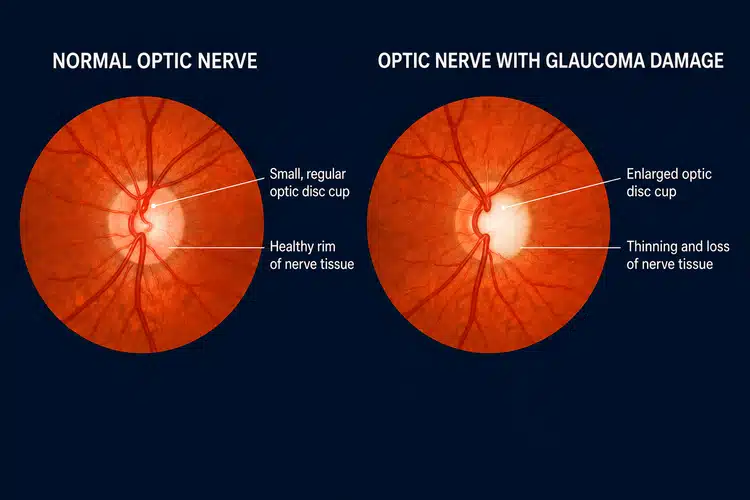
Our optometrists use a combination of simple, non-invasive tests to assess your risk and detect early signs of glaucoma, including:
Eye pressure testing (tonometry)
Optic nerve examination
Peripheral (visual field) vision testing
Assessment of your personal and family eye health history
While anyone can develop glaucoma, certain factors can increase your risk, including:
- A family history of glaucoma
- Being over the age of 50
- Elevated eye pressure
- Past eye injury or long-term steroid use
- Underlying conditions such as diabetes
Ready to See Clearly?
Reach Out Today.
We Accept All Major Health Funds